Sunday, April 11, 2010

Let's Get Ourselves An Education

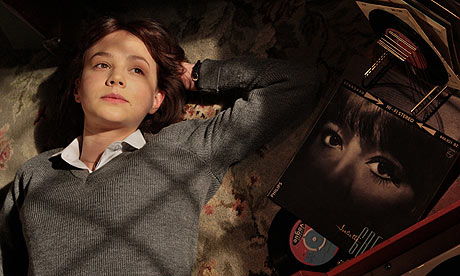
Growing up and realizing life in its fullest necessarily links to school in the long history of literature and the shorter but not less influential history of cinema. So when watching An Education we can't help thinking if not of David Copperfield, then at least of Dead Poets' Society or even more, Mona Lisa Smile. A bright young student who discovers that there is more to life than learning and following parents' rules is always a challenge to present, and the Nick Hornby-scrip rises up to our expectations. This movie is good because it's not as naive as the average American films: our charming and clever protagonist might be a teenager who wants to go her own way and thinks she knows it best, but she can spot the difference between dream and reality and can draw conclusions if needed. What sets this movie apart from others with the same subject (mind you, not the ones I mentioned before, those actually are the few exceptions) could be also named as the general difference between a high-budget blockbuster and an art-film: commercial movies tell you the idealized, black-and-white version of life, when the princess always marries the prince and they live happily until the "The End" title, while art-films tell one particular story, where you might have a faint guess what will happen but you can never be sure, because - the best way - characters think for themselves or at least writers and directors do.When watching An Education, one might get a vague feeling of familiarity: a story might seem a bit known, it might have clichés which you remember from other films - but then again, life is like that and, according to the psychoanalyst Jacques Lacan, we can only name and recognize things and values in our lives which we've already seen in other people's lives. Plus, it is set in a middle-class suburban neighbourhood of London of the 1960's which most of us only know from movies so it has to have a certain recognizability, it never claims total originality. Actually, it's the conventionality of the set and the story which makes us want to watch it, the feeling of certainty, the security of our society, our lives, our stories known by heart: if someone is special, then it's okay for them to meet new and interesting people and rebel against the boring path their parents put in front of them, if it's the 60's then love should come ahead of career, if it's romantic comedy (and with an attractive female main character mostly is) then love conquers all and without second thoughts or regrets.

But this particular piece of cinema doesn't want to sell us dreams, or if it does, then they aren't the ones we expect to buy. She might be a regular child who prefers fancy dinners and Parisian trips to studying for exams and mugging up Latin words, but she realizes soon enough that just as studying is only a part of life, so is partying. And it might be natural for a young woman to fall in love with a charming older man who makes her life so much more exciting, but that doesn't necessarily mean that she has to grab every opportunity to express her affection and that the painful and embarrassing first time should turn into a transcendental experience of love.
This movie doesn't claim that it knows life, not even that it can show us a piece of it. And it is this quality that makes it seem it could. It doesn't want to charm us with the prospect of a life which could be possible in our cultural, social and economic situation, but it never quite is, it charms us with its pictures, its story, its colours and characters. It compels us to view its events and images as a movie, to think about them not just crave for them, it doesn't give us an answer, it inclines us to ask questions. And Paris... well yes, that's as beautiful as in any romantic film set in this foreign land, an epiphany of Europe, land of love. Cause it might be just across the Channel, but even for the British it is the archetypical setting for romance.
Tuesday, January 5, 2010

The Problem with Avatar

Hi there in the New Year, sorry for disappearing again, but I'm back, so let's cut to the chase. I realized, I'm an eco-fan. No, not the shoes, that's with double c anyway, but I love ecologically aware pop-cult items. Though you, my faithful readers, might already realized this after reading my footnotes on Knowing, which I've seen as a metaphor of our imminent destruction caused by our indifference to environmental problems, but check out this: Avatar is a movie about an egocentric but cute American everyday normal guy, who gets acquainted with a civilization which, paradoxically, actually lives in harmony with nature. Pandora looks like the Garden of Eden which a 24/7 gamer smoking pot would dream in a moment of high definition when all the best background images of the fantasy role play pc games he's ever had blur together, and he doesn't have to kill anyone. Short correction on that latest: he does, we do. Because, no mistake about that, the Na'vi people may grieve over the necessary kill of a fellow living being, but the audience shouldn't. With all its pacifistic and environment-concerned messages, the first part when the initiation into this wonderful world takes place is only a long-lasting prelude to the good old Cameronian mass-destructing battle. And by mass I mean masses of florescent flowers, frisbee-like butterflies, floating (is)lands and huge and unique bonsai trees which have icicle-like leaves hanging down on them. Not to mention human fatalities which don't seem to impress anyone any more.

So Avatar does work as a metaphor of our everyday life where we connect ourselves to a machine to experience "real" life, have interesting and exciting adventures in lively and colourful environments which doesn't even come close to our grey everyday places, or as a message which says we are part of our surroundings, we can only function fully if we stay in harmony with the living organisms around us, we're in the eco-system, so we are responsible for our actions towards them. Too bad that a blockbuster can't only have messages for intelligent people, it also has to put in a lot of stereotypes, clichés and blood. Cause without them, it would be a good movie, and some people might actually go out of the plaza and think about these things, not how a chopper exploded or the bad guy got his brains scattered all over the place. But we wouldn't want that now, would we?

Friday, November 13, 2009

Knowing... but Still Not Doing Anything About It?

Well-behaved excitement of a public holiday, in contrast with a stereotypical presentation of a scared and disturbed little girl scribbling unstoppably numbers over numbers. Knowing is part of the wide-audienced catastrophe movies which are so popular lately, mixing the invasion-stereotype with the strange-little-children-acting-spooky thriller-genre. Interesting enough, it brings some philosophy too into the whole thing, and this is what makes me feel entitled to try to read into it another story entirely.

My first point: why is this apocalyptic genre so well known and preferred lately? Of course, there was the end-of-the-world "prophecy" of the millennium, where everyone half expected to get abducted by a huge, bright and alien light while doing their last shopping for a happy new year, but since that never happened, nor did the sky crush over us, there must be some other reason for getting such nice little goosebumps all over our body when we hear of yet another movie coming out with a similar trailer.

According to my theory, apart from the well known fact that people enjoy being scared and afraid as long as they know that nothing actually could happen to them, so apart from this, we can't help noticing that there indeed exists a parallel discourse about the "near" end of the world as we know it, which also gives us the creeps, but looses its effect after leaving the premises where we heard it - just like the movies do. This narrative, however, comes from a quite different paradigm, one that is considered opposite the artistic or entertaining one, and was supposed to represent the only "real" and "objective" way of understanding our world. I'm talking about science, and the stories we hear more frequently every day about our way of life's and more importantly: our living environment's imminent doom and destruction in case of continuing our present lifestyle.

The philosophical line in the movie revolves around the question of determinism. This problem, however, isn't just of a philosophical or religious nature. One of my favourite scientists, the cell-biologist Dr Bruce Lipton developed a whole concept around how learning at school the (false) theory that genes control our bodies and lives, make us go through life thinking that we are predestined to certain (of course: unfavourable) things and can't, but more unfortunately: won't do anything about it.

So it might not hurt to take a second glance at things so natural to us as preferring movies which show humanity in danger of extinction from a force we can't fight (and unlike most of the similar movies, this one doesn't end in a "last warning" or an improbable but highly expected triumph of mankind) and accepting the message Knowing as well puts in front of us: we are perfectly contented by being determined to particular things, without ever trying to change it - and trying to understand the hidden meaning of this: are we really so dumb that we see these movies, feel the urge of warning but just "don't" understand the hint, or mainly just too comfy to act anything that would require changing our daily habits? Because there is a near peril, even if not threatened by aliens.

Sunday, October 11, 2009

"I never needed you" or 3 Minutes Worth Break Up Reasons in a Pop Song

Hi there, everyone, my faithful audience, sorry for not having written for such a long time, though this particular subject has been haunting me since the hot and leisure days of summer, where one of my dear friends found this song, the Pussycat Doll's Hush Hush interesting enough to share it with us, helpless listeners, on a long journey towards water, pools, sun and bathing suits. Curious enough, these are the characteristics of a successful pop song as well. Let's take a closer look on these, apparently so harmless lyrics and see what they are saying about the "modern relationship".

The song starts with the powerful and representative voice of the group's main (and only, i might add) singer, who at that same moment begins to enlist the reasons why she doesn't want to be in a relationship with her partner. Even if the verses of this part aren't understood, the blissful ignorant can't enjoy the melody for too long, since the theme and effect of the song will develop sooner than expected: there comes the desperate, whining tone of the refrain, which none can be so fortunate as to mistake: it is a woman's last wish in a break-up, the testament of a dying relationship.
So why does she want to break up? First she's stating out what she, and let's be honest, all women detest about men, and that is: pretending they know best, and bragging about it, correcting the apparently false ideas the fair and gentle sex has about such brutal and non-ladylike things as life in general and business, money and human nature in particular. Yes, definitely, we could do without that. But then they creep in, all the other characteristics which women actually like in men, and for long centuries have valued their company for them: to be strong, to give help, to express certain things in words (as well), to be there everyday. So why are those things rejected? And isn't the whole relationship rejected with this? From an evolutionarily point of view, a study concerned with the survival of the race, there definitely is a need for couple life. The pair formed of the human male and female should stay together at least for the sake of the baby (that is: the next generation, the future of the race) for quite a long time, since not only the baby alone, but neither the mother alone is fit enough to provide for the survival of the child in the early ages.

The feminist movements, which protested about the too literal reading of this theory, indeed helped on the unfavourable status of women deserted to the kitchen and nursery by the industrial revolution's division of labour in the families. But please, let's be reasonable, we're light years form that age, if not in all the world, then on the parts where they dress as those in the video, and if not in all social classes, then most certainly in those which the singer(s) represent(s). Because in the time and place of primitive farming and grain cultivating, there were no unjust, sexist discrimination, which might excuse the fair sex from hard labour, just as there was no pretence that someone could "make it on their own".
So basically, this song expresses that its singer doesn't need any men, for any reasons there could be. Not rejecting them from a feminist point of view, refusing their unfair influence and power over them - no, this guy mentioned in the lyrics doesn't have anything on her. That's why in the extended version, the I will survive insertion seems so misplaced: that's a song about a person in love trying to break free of the unwanted relationship which still overpowers them - here there is no love, there are no bonds, nobody ever doubts that she can survive without him, so no point in proving it.

What this song seems to be saying is that there is no need for men for economic emotional or any purposes at all, and apparently no point in being together just for the sake of love, without ever wanting something from the other. I wander what this pearl of popular culture says about today's romantic relationship. Is it rushing to its end?

Wednesday, July 15, 2009

Gossip Girl - or Why We Like Gossip

I was in the middle of wiping my eyes over a touching reuniting scene accompanied by the perfect tunes of Apologize in one of the episodes of Gossip Girl ("you know you love me, xoxo"), when from the texture of the paper handkerchief, which didn't feel as silky as a commercial would suggest it, or didn't look as fancy and elegant as the ones they use in these types of movies, I just realized why my life is almost as perfect as the lives of those wonderful people I see on screen so not flatteringly often lately. And why I was always right when I became angry because, though anticipated, my own boyfriend didn't come after me when we had an argument with one of our friends, or didn't defend me in front of his (well, truth be told, not quarter as manipulative, annoying and well dressed) parents, or just didn't guess that having a lousy day, all I wanted was a hot and candle-lit bubble bath with rose petals scattered all over the perfectly clean and warm bathroom with the perfectly-right-temperatured champagne and perfectly-sweet-and-sunripe strawberries no mater the season. And how dare him suggesting that he also might have had a rough day? After all, his brother doesn't have drug problems, his parents don't want to divorce, his grandmother doesn't have cancer and I didn't sleep with his best friend. So why would he, a guy, have a hard day?

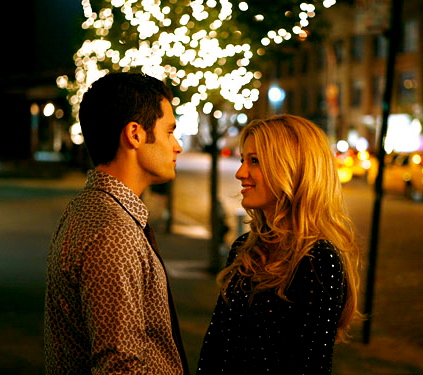
After all, these are the movies which suggest that there is this perfect thing called love which only comes once in a lifetime, unexpected but overwhelming, under the ravishing backgrounds of blooming boulevard trees and sentimental melodies, never under annoyed honkings of hurried drivers. (There is, of course an image to this as well, google-ing Serena and Dan pops out among the firsts.) And these movies are made to remind us that our lives and relationships, though never quite getting to the aspired perfections, did have and could have some of the earthly counterpart of these events, just as the romantic meaning of one garden-ripped daisy compares to a dozen long stem red roses or the excitement of playing pool and making striptease on the table could ever measure up.

And, since it's made for adolescent girls or middle-aged housewives (no offence for the stereotype, I hope), (this time) Gossip Girl tells us the following things about life: beautiful rich brats are only revengeful when they don't get any, sleeping with your best friend's boyfriend would get you the nicest guy in school, parents who have very strict ideas about their offspring's future usually have problems at work resulting to drug addictions, and that although our lives could never get this glamorous, it probably won't get this crazy either, so we're good.

Friday, July 3, 2009

What Would You Do If You Knew You Were Going To Die?

" - Dave, can I pose a somewhat abstract, purely hypothetical question?
- Sure.
- If you knew you're gonna die, possibly soon, what would you do?
- Well, dunno... Am I the richest man on Earth?
- No, you're you.
- Do I have a superpower?
- No, you're you.
- I know I'm me, but do I have a superpower?
- No, why would you have a superpower?
- Dunno, you said it was hypothetical,
- Fine, yes, you're really good at math.
- That's not a power, that's a skill.
- Ok, you're good at math and you're invisible. And you know you're gonna die.
- That's easy, I'd go to space camp.
...
- You're invisible and you'd go to space camp?
- I didn't pick invisible, you picked invisible."
(Stranger than Fiction)

Monday, June 22, 2009

The Taxi Driver, continued

I've just seen Stranger than Fiction. And it dawned to me again, the irreparable and constantly forgotten inconsistency between life and literature. Or film. Or music videos. Or commercials, of all the genres which dispose with the means of presenting everyday life, ergo they pretend they do. And I reminisced on my taxi driver, both the one I met and the one I created, his life and his story.

As part of a novel, a character who, for his old age becomes full (leisure) time engaged in picking up unaware hitch-hikers, for the sake of a once had job, which was invented for solitary and hurried people, making him also solitary but at last with all the time on his hands, but not being able to spend it... - as a character, his life seams greatly open to symbolic interpretations on the condition of modern times and life in general. As for a real life person, this seams more likely an unfortunate course of events, to lead to an unfortunate course of life. The difference, of course, being: deliberateness. While a character, by definition, has a purpose in a novel (film etc.) in this case, making the readers realize the futility of such a life; for a living person, such realization hardly ever occurs. There exists, no question about it, a type of narrative which can be put over a human life to give intention to it, and for the European culture it's Christianity which is often (mistakenly) read as the easy way out of responsibility over one's life and purposefulness ("accepting" it that whatever happens it must be for better, but at least occurring with our Lord's consent). On our case, however, not even this pretence can be pulled off.

We have to realize that we live in a world, where, as I quoted in an earlier post, our means of socialization have greatly diminished. A person with an average job and personality, as part of the western civilization, has every possibility of ending up alone at their old ages. We simply miss the common places (this expression doesn't have a double meaning for no good reason) where people can meet, gather around and be together. Of course, we do have new ones, virtual rooms where time and spacial differences disappear and we get united by our common interests no matter age, gender, race or other stereotypical identity-setter, but in their physical reality, meeting new people just doesn't happen any more.

In an age when, as Jókai's naively visionary but in some parts painfully accurate science fiction novel stated, running around for our personal business without having the time to get to know out interlocutor has become our basic survival instinct, or because of the apparently increased mobility and simplicity in making new contacts naturally given spacial and familiar relationships get torn apart without a second thought - deliberateness gets a new importance. Immanuel Kant thought that religion and lack of education made people remain immature, (in Answering the Question: What is Enlightenment?) but after two hundred years, taking one's faith in one's own hand is still a challenge - our taxi driver's story could have this elevated and outlying interpretation.

So, as a literary character, he would be a symbol of one of the aspects of a postmodern(?) way of life, as a blog entry he's just an interesting guy in a new event. But taking control means also deciding on the source of our inspiration and lessons, even if we can't wait until we start hearing a narrator voice speaking about our lives (getting back to our previous subject, deliberateness in Stranger than Fiction - for those who just didn't get it).